
Blog

Book Review: Five Years, One Kata

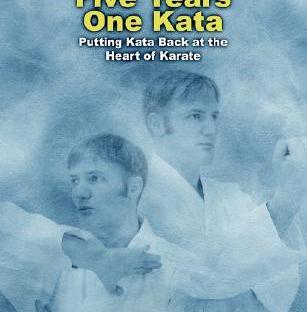
As part of my own martial arts journey, I have started to amass a small library of martial arts books and literature. Several of these books are from the founders of modern karate styles like Mabuni Kenwa and Motobu Choki. Last week, I decided to add a more modern tome to the collection: “Five Years, One Kata: Putting Kata Back at the Heart of Karate”.

Bill Burgar, at the time of print a 6th-dan in Shotokan, undertook an experiment unique to modern karate practitioners… (spoiler alert: it is in the title!) In his book, he shares his journey of discovery of mining the kata Gojushiho for techniques, self defense principles, and tactics. Less important than the specific techniques that recorded from Gojushiho and developed into a specific fighting syllabus is the process he developed to do it.

I have not read other reviews of this book even though it is more than 20 years old. Suffice it to say, however, that it is probably still highly controversial to “traditional” karate purists because Burgar makes some pretty radical claims and suggestions… and he’s not necessarily wrong.

What’s in the book?

If you ever wondered how an engineer might write a book about kata, then look no further! Burgar chews through and condenses an incredible amount of resources and source material to answer a basic and fundamental question: “how do I know the things I am doing in kata are actually worth my time to train?”

Interestingly, as a result of beginning this blog, and right before picking up this book, I started thinking of kata in terms of mnemonic devices for the body. That is exactly how Burgar approaches kata. (More on this later)

In the first section, Burgar lays out some principles that he says should guide exploration of kata. One of the key point is that the karateka should understanding how a “typical” fight (or as he terms it, Habitual Acts of Violence) might actually start and then using those scenarios to guide the exploration of kata technique application (oyo).

He goes dispels many of the same karate myths… of multiple attackers who faint at the sight of the awesome kata performing karateka.

He goes dispels many of the same karate myths that we started discussing here (the very first post, in fact) of multiple attackers who faint at the sight of the awesome kata performing karateka. But rather than just simply deride the myth as I have, Burgar take the time to explain how those myths form terrible habits, and how those habit can get someone injured or even killed.

So what to do, you ask? Burgar has an entire section dedicated to the analysis (bunkai) of techniques within a specific kata, detailed rating criteria, and guiding principles through which to examine those techniques.

In the second section, he applies the principles that he lays out in Section 1 to Gojushiho in great detail (complete with lots of photos) and contrasts his modifications to those of the stylized version he learned in Shotokan. Over half of the real estate in the book is dedicated to sharing these lessons that he learned over five years of painstaking study of the kata.

In wrapping up his book in the third section, Burgar give a few ideas as to how a karateka may approach his or her detailed analysis of kata in order to mine the gold buried within…. and this is where the controversy probably starts.

Burgar makes the bold statement that studying “someone else’s” kata is a complete waste of time. If he had to do it over again, he would not have studied Gojushiho in the detail that he did. Instead, he says that karateka should create their own personal kata as their unique self-defense syllabus… and let other people figure out their own kata.

Opinion

Whether you eventually agree with Burgar’s final conclusions or not, his detailed framework for studying, disassembling and reassembling existing kata into a complete fighting system is highly impactful.

In fact, it is clear that, twenty years later, many of the principles that Burgar laid out have gained popularity among and are the driving force behind some of the more well known martial arts researchers (like Iain Abernathy and Jesse Enkamp). My own conclusion of kata being a mnemonic device is probably a result of his research being distilled through and retransmitted through various sources that have shaped my own thinking.

I’m still not entirely sure how I feel about abandoning “old” kata altogether in favor of developing an “iKata”. I think there is a time and a place for the kata established the fundamentals of the martial arts that we strive to learn and perfect. But… I think that it is okay to question the thinking that has been transmitted to us through the giant game of telephone to expose holes, weaknesses and deficiencies of the old knowledge that may no longer fit our circumstances. Maybe I do not need to know how to disarm samurai… but maybe, there are ways to encode defenses against someone threatening me with a pistol into instinct and good habits…

There are few great artists that just started creating masterpieces. Many of them went to art class and learned how to recreate the classics in their own way. Maybe, this is the balance between throwing out all of the old classics, and never changing.

Thank you for reading. Until next time.

The goal of the Village Karate of Stafford is to join the efforts to restore information that was lost about the traditional Okinawan martial arts and elevate their status legitimate self defense systems that are applicable to our times. In some cases, we can piece together bits of information that is scattered around the world like a bunch of forensic historians. In other cases, we just have to experiment with concepts, just like the forbearers of karate did, and figure out what works (and then ditch the rest).

Everyone has *something* to offer

I admit it. Sometimes, when it comes to martial arts, I have a bit of a chip on my shoulder. I’ve studied some form hand-to-hand combat style for nearly three decades. During that time, I’ve subdivided the martial arts into those who are serious (typically includes Okinawan, BJJ and Muay Thai school), and those who aren’t (the “McDojos” of the world).

In fact, I currently have another post in draft about how to know if your school is “good”. It is long and maybe a tad self-righteous… and there might be a reason that I haven’t hit “publish”.

Normally, when I walk into a new serious school, I’ll wear my white belt which is dingy and even bloodstained. I tell myself it is because I am being humble. But I won’t go to a “non-serious” school. I mean… what could they really offer me? That doesn’t sound much like humility.

Keep to the beat!

So, a funny thing happened the other day, that got me thinking about my viewpoint and the massive chip on my shoulder. Sensei Rob had to cancel class due to work conflicts. Instead of taking my youngest son to karate, I took him to his swim practice at the local rec center. I still had on my gi pants.

My original plane was to find a corner of the rec center or one of the workout studios to go over kata or something. Then I decided to check the course schedule and saw “cardio kickboxing”. I went.

My mental image was one of Billie Blanks, some happy music, and spandex clad cardio kickboxers with so-so form. And really, minus Billie Blanks, I wasn’t far off… but I think that, despite not really knowing much about it, I underestimated this class.

Look, we’ve all had those classes in the dojo (and nearly every day in a BJJ school) that are simply draining. About five minutes in, I’m thinking “what the hell did I just get myself into??”

Jab, cross, hook, knee…

There were two things that were obvious to me. One, I was probably the only actual trained fighter in that studio. Two, it didn’t matter. I was in Billie Blanks’ world, not in a dojo, not on a mat, and not in an alley.

Get in your horse stance, and squat pulse…

Fifteen minutes in, it is slowly dawning on me… uppercut, uppercut, hook, hook… that I have another forty minutes of this.

Burpee, bob and weave, bob and weave, burpee…

So I embraced the suck, and accepted the class for what it is… a golden opportunity.

Alright class, next combo is with side kicks. Remember to chamber your leg.

I’m going to try and work on my form, to the beat, and try not to get sloppy.

Class was over, and I was drenched. It felt great.

At the moment, my two regrets are that I severely underestimated this class, and that it conflicts with Sensei Rob’s class because I would definitely go back.

Wrap up

That class made me a better martial arts. It wasn’t because I learned any new techniques or got instruction on my form or kata… It was because I had my butt handed to me in a cardio class that uses something that I’ve been doing for a long time as the vehicle for getting into shape… and I enjoyed the challenge.

More importantly, it makes me realize that the pool of schools with nothing to offer is significantly smaller than I had originally thought. If they are teaching dim mac (death touch), run away. Otherwise, maybe try and keep an open mind. I think I will… and I have some revising to do to that other post…

Until next time.

The goal of the Village Karate of Stafford is to join the efforts to restore information that was lost about the traditional Okinawan martial arts and elevate their status legitimate self defense systems that are applicable to our times. In some cases, we can piece together bits of information that is scattered around the world like a bunch of forensic historians. In other cases, we just have to experiment with concepts, just like the forbearers of karate did, and figure out what works (and then ditch the rest).
A Giant Game of “Telephone”: 3 Reasons Why Your Martial Arts Style is ‘Wrong’

“That’s not how it is done.”

“That isn’t how I was taught.”

“In my style, we do it like this.”

Intro

We all know the children’s game “Telephone”. The teacher says a phrase: “There’s a bad moon on the rise.” Someone else repeats it as, “There’s a bathroom on the right.” It finishes as something like, “Clean the bathroom and turn off the light.”

If you are an American and you are familiar with the 1969 Creedence Clear Water Revival hit, “Bad Moon Rising”, you probably know the funny alternate verse to one of the most popular refrains. Otherwise, the context and humor is probably lost on you.

Now imagine if you are on a small island and you don’t speak the native language, and you try to play this “telephone” game. Imagine the creative interpretations that you can have because you lack several basic items to translate the phrase correctly. You don’t know the language, the culture or specific turns of phrase that may be used in conversation.

In fact, I just learned the other day that my pronunciation of the Japanese work for “kick” (geri) is not pronounced as it is written in English! The word geri in Japanese is, in fact, diarrhea in English. So, while flinging poo may be a self defense strategy (monkeys do it after all), it is a bit messy, and martial arts teachers probably don’t want to have to clean that up. So perhaps we’ll stick with chudan maegeri (‘choo-dan my-Keri’) instead.

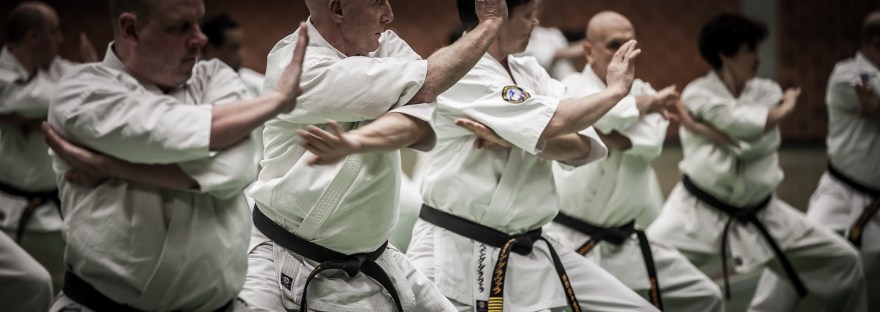
As we previously discussed, kata are a physical form of language that expresses the focus and philosophies of the people that taught them. And different teachers have different things that they focus on, even when they are all teaching from the same lesson plan. Of course, being good students, we like to follow our sensei’s lead as closely as possible.

But here are three reasons why copying exactly what our sensei does still leads to our martial art style being “wrong”.

Lost in translation

One of the simplest explanations of differences between styles is the variations in language. A well-documented example of this is the change of the pinan-series of kata to heian when Funakoshi Sensei imported his karate to Japan. The kanji for pinan and heian is the same… which means that the pronunciation and meaning of the words is different.

The Karate Nerd has a wonderful article on the history of the heian-series kata and how the name evolved to fit the circumstances in Japan.

So, if the naming convention of certain kata can be changed by simple variations of language across cultures within the same region, imagine how those differences are magnified when we begin to cross oceans.

Sensei got older

A theme that is emerging with a number of karate researchers is the idea of changing the karate to fit your own body. A person who is 6’3″ and 235 pounds will train very differently from someone who is 5’4″ and 140 pounds. And of course, the adversary has a say too.

The way someone teaches karate in their 30s will be different than in their 40s or 50s. Plus memory fades and things change as both our understanding evolves and our memories distort.

The video above is a brief explanation of the history of American Kenpo. (pronounced kem-po… why? because translation!) When the founder of American Kenpo, Ed Parker, passed away suddenly, there was a leadership vacuum and many of his former students rushed to fill the leadership void. Stylistic differences within the same style and with the same founder exist based upon when someone studied with Sensei Parker!

Of course, this issue is not unique to American Kenpo. It is prevalent in nearly every martial art system that has ever existed.

Different strokes

Let’s go back to the differences in size really quickly. Say you are a 5’2″ Okinawan karate master teaching young U.S. Marines your moves. They average about 6’0″.

Where are your hands when you are demonstrating blocking techniques to someone 8-inches taller than you?

Now… what happens when those Marines go home and begin teaching their own students? When they demonstrate a technique, their hands are higher than in other styles!

What to do…

As martial artists we have to come to terms and accept two very opposite ideas: the drive for standardization (or is it standardisation) and the need to customize our art to ourselves.

The standardization is our way of paying homage to the ones who came before us in life and preserving some of their memory in our very muscle and bone.

But standardization still needs to be put in its proper context, and the arts that our forbearers gave us must adapt to our times, places, circumstances and bodies.

What does this mean?

It means that your style is wrong because it is not an exact copy of what your sensei originally learned, or his sensei before him, or her sensei before her. Nor should it be.

Living things adapt… or they die.

Martial arts are often spoken of in terms of lineage, and this idea of sharing ideas, concepts, kata, and even cultural principles, is the same as the passing of DNA from one generation to the next.

Embracing the two opposite ideas of standardization and customization means to understand the principles of the philosophy and movement that your art is trying to convey (the general standards) and figure out how it best fits your body (customization). If you are fortunate enough to teach your art, try to pass along the general meanings of the art to teach your student why something is done in a particular way so that they may understand how it may be applied by them.

The goal of the Village Karate of Stafford is to join the efforts to restore information that was lost about the traditional Okinawan martial arts and elevate their status legitimate self defense systems that are applicable to our times. In some cases, we can piece together bits of information that is scattered around the world like a bunch of forensic historians. In other cases, we just have to experiment with concepts, just like the forbearers of karate did, and figure out what works (and then ditch the rest).
What is Kata?

Kata is vocabulary.

The end.

Okay… I guess I’ll explain!

Many military organizations throughout the world use a concept called “doctrine” to impart specific ways of approaching common situations and showing ways to deal with them. Doctrine is often a distillation of important lessons learned throughout that military’s history and experience. Military leaders spend hundreds of hours studying doctrine and learning how to apply the precepts in real-world situations.

The situations described in doctrinal scenarios can only approximate real world situations. When militaries operate, they use doctrine as a starting point for understanding a situation and the range of potential solutions for that situation. But since doctrinal solutions are tailored to doctrinal scenarios, the solutions in doctrine have to modified to fit the situation at hand. While anyone could work out a similar solution to a given problem, doctrine helps arrive at good solutions more quickly by because the trial and error involved to identify those solutions has already been worked out.

Kata is martial arts doctrine

Many martial arts historians view Okinawa as a crucible of eastern martial arts. It was positioned as a crossroads of several civilizations with their own martial arts and self-defense traditions. From the 1400 to 1800s, Okinawans learned these different traditions and began melding them together to help them deal with the dangers they face.

There are two catalysts for the development: the prohibition of carrying weapons by King Sho Hashi in the 1400s and the occupation of Okinawan by the Satsuma samurai starting in the 1600s. The Okinawans had to develop ways to protect themselves and resist foreign occupation, but doing so was dangerous and punishable by execution. So, the deposed Okinawan nobility developed their fighting styles in secret.

The early self defense methods and concepts couldn’t be written down for two reasons. First, the risk of discovery was too great. Second, literacy during this time period was not wide spread. So how could Okinawans transmit important self defense concepts and techniques in secret without writing them down?

It is important to remember that the Okinawans did not “invent” kata. They adapted a number of older, more ancient forms from Chinese kung fu. As they stripped down kung fu, combined it with their own manner of grappling and other arts from the Philippines and Japan, Okinawan teachers began creating their own forms to reflect the hard lessons that they learned over time.

In short, kata became the physical embodiment of self defense doctrine for Okinawans.

The “Aha” Moment

On the surface, kata looks goofy. Seriously.

For example, I learned the Isshinryu kata, Wansu, about three months ago, and my initial impression was that it is strange and disjointed. The “surface”, also called “omote”, explanations of kata simply don’t contribute this initial impression. But after researching some of the less apparent explanations, the kata began to make more sense. Interestingly enough, I quite enjoy the kata now.

In my time of studying martial arts, I’ve learned close to 30 kata and some of them still remain as mysterious to me as the day that I learned them.

About a week ago, we were going through various wrist locks with Sensei Rob. He showed us a block and flow drill to a wrist lock/arm bar.

AHA!

We had just done the “high x-block” to “down block” movement in Pinan/Heian Godan, a kata that I learned when I was 10. Thirty-some years later, I now have an understanding as to what it actually means.

As this moment of clarity popped into my mind, I blurted out, “Just like in ‘Pinan Godan”, right?” And everyone standing there, who has also spent countless hours practicing this same kata, knew exactly what I meant and needed no further explanation.

Just as military planners and leaders are able to communicate specific concepts with doctrinal terminology, we used the language and concepts imbedded in kata to communicate about solutions to a specific situation. It was a pretty cool moment.

The problem with kata and karate

Reread the paragraph where I said that the four of us working on the techniques had “countless hours” in studying a specific kata. Collectively, the four of us probably have about 125 years of experience in martial arts.

The challenge is of course, that those moments in discussing particular applications of kata are years (bordering on a lifetime) in the making. It doesn’t satisfy the American urge for instant gratification.

Why spend years practicing a kata when you can jump into a brand new ex-Navy Seal/CIA/Mossad/Special Forces/MMA champion “system” that teaches you all of the same stuff in five minutes? (That’s part of the marketing shtick, by the way.)

The cold and simple answer is that “you don’t”. But…

Remember how we said that kata are already a distillation of techniques that help deal with certain self defense situations? And remember how we also said those techniques were honed in some pretty scary conditions over 400 years?

Well, you can study 400 years of very painfully learned lessons, or you can go for slick marketing.

The difference in kata is that you can do it anywhere and teach your body its language of self defense. Just make sure that those who you learn the kata from can go beyond the funky foot placement and waving hands. They need to know what those things are intended to do.

That is why we’re here. We don’t feel the need to tear down what others are doing in order to add to our own understanding of self defense and martial arts. But we do have a great deal of myths and distractions to dispel about karate in general and kata in particular.

The goal of the Village Karate of Stafford is to join the efforts to restore information that was lost about the traditional Okinawan martial arts and elevate their status legitimate self defense systems that are applicable to our times. In some cases, we can piece together bits of information that is scattered around the world like a bunch of forensic historians. In other cases, we just have to experiment with concepts, just like the forbearers of karate did, and figure out what works (and then ditch the rest).

Float Like a Butterfly…

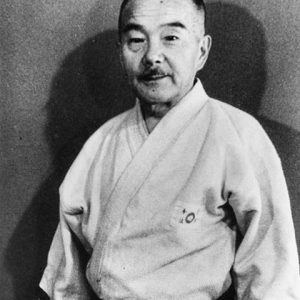
One of the benefactors and proponents of the modernization of karate was a man named Konishi Yasuhiro. He served as a sounding board to many of the masters who would go on to found the first major formalized branches of karate in Japan. In his one of letters, “Kenyaku no Shikatsu” (“The difference between life and death lies with your fists and legs”) he warns against some of tendencies of training in karate that modern day critics still observe.

What is at the core of this criticism you ask? Kata. (E.g. the karate version of one-person drills.)

You’re doing it wrong…

Konishi’s main point in his letter was about the importance of speed and timing in a fight. He calls the awareness of distance between you and your opponent ma-ai. In his words, good practitioners of karate would keep this principles in mind while they train and even “while they dream”.

Even in the early days of the popularization of karate, Konishi observed that “[he] noticed practitioners spend unnecessary energy on pointless movements which, in the end, only draws laughs from experts at their wasted efforts.” He goes on to say that there is an over-emphasis on physical fitness and how an individual performs a technique at the expense of training ma-ai.

Central to this criticism is the way kata is trained where the tendency is to treat kata as “immovable forms” or dance competitions trying to put on “gorgeous displays“.

Instead, he says, “[kata] are intended to behave like water being swirled about in a bowl, something that is capable of a multitude of changes and limitless ability to adapt to what is around it.”

Sting like a bee

So how does Konishi suggest that one train? And how does a karateka make use of the tools and drills, including kata, to train for a self-defense situation?

He says, “the way you utilize the distance between you and your opponent is far more important than the effectiveness [of the actual strikes] you apply. It follows that other details of the encounter… could be thought of as an after effect of reaching your ideal distance.” In other words, good techniques applied with poor timing or at the wrong distance are essentially meaningless, and worse can be dangerous because they leave you exposed.

Boxers, wrestlers, Brazilian jiu jistu practitioners all have their own versions of solo drills

So how does kata factor into all of this?

Based on what the forbearers of karate said, kata should be used to practice speed, timing, distance, power and transferring of weight.

But as we’ve seen from Konishi’s writings, kata is simply not enough. For kata to be effective, it must be paired with two-person drills that use kata as a template, or lesson plan, for specific self-defense applications. The drills must increase in terms of speed, resistance and chaos so that they can closely replicate a real self-defense scenario.

Whether these new self-defense schools realize it or not, they rely on the same format used by good dojos (karate schools) minus the kata. Boxers, wrestlers, Brazilian jiu jistu practitioners all have their own versions of solo drills intended for the same purpose. The main difference between kata and these other one-person drills is that they usually don’t have a prearranged pattern to them. (Definitely don’t tell them that they are doing a version of their styles’ kata!)

So, kata is not useless… as long as it is not the only thing being trained.

If kata is the sole focus, and it is not being paired with additional training that focuses on speed, distance, timing, resistance and violence of action, then, as Konishi says, you’re just getting ready for fancy dance competitions.

The takeaways

So to wrap this up, karate, like any other self-defense system or martial art, requires an understanding of your spatial relationship to an attacker. Defending yourself means that you close (or increase) the distance to a where you feel that you can gain a position of advantage, and then apply whatever technique is best suited to the situation.

The goal of the Village Karate of Stafford is to join the efforts to restore information that was lost about the traditional Okinawan martial arts and elevate their status legitimate self defense systems that are applicable to our times. In some cases, we can piece together bits of information that is scattered around the world like a bunch of forensic historians. In other cases, we just have to experiment with concepts, just like the forbearers of karate did, and figure out what works (and then ditch the rest).

Source: Karate Kenpo by Mabuni Kenwa, translated by Eric Shahan, 2020