The really short answer is the focus/philosophy of the specific art, technique focus, and stances.
Originally, karate was an combination of local Okinawan grappling, called tegumi, Chinese kung fu and other arts from Indonesia, the Philippines, Formosa, and Thailand. Because it was treated as a self-defense system with a grappling base, most of the techniques were joint locks, throws and control techniques from within grabbing/gripping distance. Strikes were short, fast and focused on “vital points” (nerve clusters) to incapacitate someone as quickly as possible.
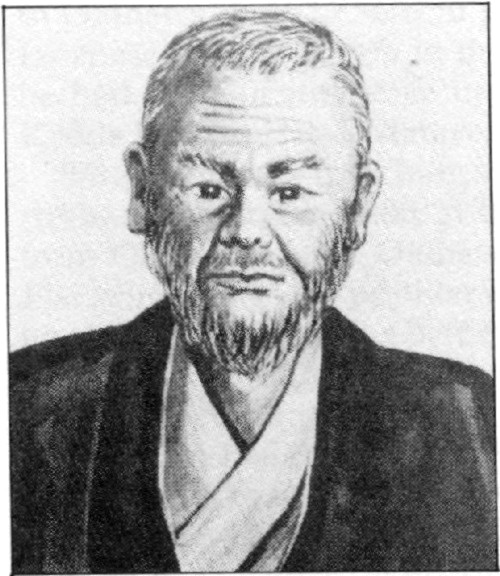
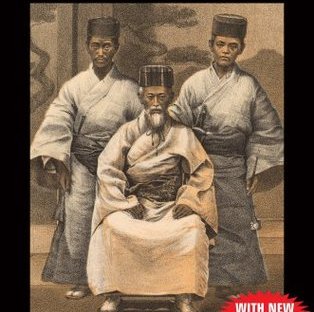
Historically, Okinawan karate was taught in small groups for the aforementioned self-defense purposes. After Japan took over Okinawa and abolished the Okinawan monarchy, Anko Itosu (one of the Okinawan king’s body guards, and also one of Funakoshi Gichin’s teachers) convinced the local Okinawan prefecture to adopt karate into the public school system. He made some changes to classical karate and created new kata for young students (the Pinan/Heian katas).
When it was imported to mainland Japan, there were a number of important things happening. Judo was created by Jigoro Kano to rival Greco-Roman wrestling, and the Japanese (who didn’t have a true striking art since) decided that they would adopt karate as a rival system to Western boxing and French savate (foot boxing). So, striking became a larger focus of Japanese karate – Shotokan derivates, like Kyokoshin, are almost totally focused on striking.
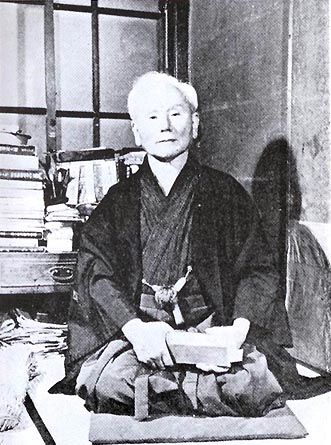
Funakoshi Gichin and other karate forebearers changed the philosophy to focus on character development (which also had importance to developing young men for military service). Also, since classes were taught in large auditoriums, movements became larger and a bit more embellished, in part, so that folks in the back of the class could see what was happening! Also, since Japan was going through a period of intense nationalism, references to Chinese-hand (todi, the original Okinawan name for karate) were eliminated. Funakoshi Gichin even went as far as changing kata names from Chinese-derived names to Japanese name with similar meaning (e.g. Pinan to Heain, Seisan to Hangetsu, Wansu to Enpi, Chinto to Gankakku, Nianhanchi to Tekki, etc).
This is obviously a way over-simplified answer, but as I said, folks have written books about this.
So in summary (again, simplified):
Okinawan karate tends to focus on close-in fighting; Japanese karate has a larger focus on longer-range striking
Okinawan stances are more upright; Japanese karate tends to have lower stances
Okinawan focus tends to be on self-defense (this is slowly changing though too); Japanese karate is focused on character development and fitness
It has been a while! Enough of that… let’s get into it…
Last year, I was at a place in my life where I could once again dedicate time to the study of martial arts. Like many practitioners, it has been a lifelong journey of learning, trial, and many, many errors. In addition to stepping back into a dojo, a Brazilian Jiu Jitsu gym, and a sunny basketball court, I’ve spent a great deal of time researching history and applications of various martial arts. It borders on obsession.
There are so many good resources, both in print and in video, that showcase the history, culture and effectiveness of classical karate, it is hard to name them all. I’ve reviewed a handful of books (and more to come).
But even with all of this material, knowledge, expertise, and proven effectiveness both in controlled environments like the UFC and in the chaotic circumstances of real-world self defense, karate has a horrible reputation among modern day martial artists and keyboard warriors alike. Why?
Two words: sport, karate.
I tried…
Since coming back to martial arts after about a four year hiatus, and becoming a part of various online communities, I’ve tried to take a very live and let live approach with respect to various we’ll call them “interpretations” of karate. But frankly, I just can’t pretend anymore.
This change of heart culminated about two weeks ago when my son and I competed at a national-level sport karate tournament. I haven’t been to a tournament of this size for nearly 30 years, and obviously, a great deal has changed since then. Prior to this, we also competed in a smaller local tournament, and still made many of the same observations. The difference between the two tournaments? The scale. I’ll get to this in a second.
So what is it about sport “karate” that has me so bothered and why does it matter?
So first thing is first… karate is an Okinawan cultural artifact, and in my opinion, it should be treated as such. As a Westerner, there are many linguistic, historical, cultural and religious undercurrents that lead to the development of karate that I can study but never fully appreciate. There are certain traditions that I can imitate (bowing, wearing a dogi -which is actually Japanese, salutations in kata, etc.) but they are not mine to change or adulterate. Even within the vast amount of room for creative interpretation of kata, techniques, and teaching methods, there are limits to what a non-Okinawan may actually change without some sort of Okinawan acceptance.
Everything about sport “karate” smacks of a cheap mass produced facsimile of the original that strips out the soul of the art in favor of pleasing crowds and making money (kind of like a Disney Star Wars trilogy…). It is hollow, vapid, and utterly devoid of any meaningful traditional, cultural or historical value.
A prime example of the sport “karate” kata
One of the ways to “win” in sport “karate” traditional kata division is to find an obscure kata and mutilate it as much as possible without actually changing the movements. The lady in the video above is performing Go Pei Sho.
Now, contrast the above performance (which received many applause and a won the competitor a grand championship) with the demonstration below (which, by the way, also has an introduction which includes the historical and cultural significance of the kata).
A really incredible demonstration of Go Pei Sho
The popularity of sport “karate” has completely overshadowed the practical and cultural value of classical karate just by virtue of the fact that sport “karate” schools pump out blackbelts by the thousands every year. The tournaments are massive, and the financial incentives to hand out flashy prizes and cash awards are vast.
The simple truth of sport “karate” is that it is a money machine machine disguised in “confidence boosting” and “achieving fitness goals” marketing jargon. While it may indeed be a confidence builder and help some people with fitness, it does so at the expense of someone else’s cultural heritage (we’re good at that in the US).
You ain’t seen nothin yet…
If you think the histrionics of the Go Pei Sho performance was bad, we haven’t even discussed the shenanigans with Okinawan and Japanese weapons.
By far, three of the most popular weapons in sport “karate” are bos (staffs), nunchaku, and swords.
An “extreme musical” weapon form… which won the division
Bo and staff performances include all of the obligatory yelling and screaming that one sees with empty hand kata, but now there are props to showcase hand-eye coordination. And to be completely fair, there is an incredible degree of skill involved in the tricks and twirls that one may see. But at what point does it cross the line from a martial art to a dance? Funny you should ask…
Let’s ask the founders of modern karate what they think:
…It is not a dance competition trying to decide who has the most gorgeous display… it is a form of self-defense that can be the difference between life and death.
-Konish Kazuhiro, Excerpt from Mabuni Kenwa’s “Karate Kenpo: The Art of Self-Defense”
Once a kata has been learned, it must be practised repeatedly until it can be applied in an emergency, for knowledge of just the sequence of a kata in karate is useless.
-Funakoshi Gichin
“Kata are not some kind of beautiful competitive dance, but a grand martial art of self-defense, which determines life and death.”
-Mabuni Kenwa
“You may train for a long time, but if you merely move your hands and feet and jump up and down like a puppet, learning karate is not very different from learning a dance. You will never have reached the heart of the matter; you will have failed to grasp the quintessence of karate-do.”
-Funakoshi Gichin (again)
The early Okinawan karate masters were exceptionally pragmatic. According to most available accounts, the primary influence on Okinawan todi came from the Fujian Province in China. While kung fu styles have their own practicality, they also add a bit of flair. That flair is essentially stripped out of todi/karate and we’re left with a simple, utilitarian, and brutal system of self-defense.
Tokumine no Kun demonstrated by Michael Calandra
In other words, if something didn’t work, or it was just for show, the Okinawans discarded it. The quotes above (of which there are dozens more) only serve to reinforce that point.
So what relationship does bo twirling have to karate? Simply put, it doesn’t. If it does not have current or historical self-defense value, it is not karate. Full stop.
One can easily find the same examples of other watered down Okinawan kobudo weapons such as nunchaku, sai, eiku, kama, or tuifa (tonfa) in sport “karate”, so I won’t belabor the point.
But wait… there’s more
As horrible as the empty hand and Okinawan kobudo sport dances are, it actually gets worse… Yes… seriously.
Let me preface this by saying I am no sword expert. I have a handful of swordsmanship classes under my belt, but I do practice with a live blade. In other words, I train with a sense of paranoia and respect for the weapon in my hands. And frankly, real iaido kata are kind of short, and unless you know what is happening, somewhat boring to watch.
Iaido kata
In the clip below, the gentlemen demonstrates what I believe to be good fundamentals. His stances are grounded, he cuts instead of chops, and the techniques demonstrated are legitimate sword techniques (maybe including some of the jumps – I don’t actually know). But let me start the video where things get dicey…
“Traditional” katana division
Notice how the competitor cleans the blood of his imaginary opponent off of his blade using his sleeve? Not only is this impractical, it is dangerous. Sorry… I’m not trying this at home with my live blade.
But hey… it looks cool, and I think it originated from Kill Bill.
Trading pom-poms for belts
I’m just going to leave this here…
If you’ve made it this far, I think you’ve already figured out what I have to say about this.
Wrap-up
So why does any of this matter, and why make a fuss about it?
From an outside perspective, this is not much different than a cheerleading, gymnastics or dance competition. And if it were an one of those things without a disguise, I wouldn’t care.
It matters because fundamentally, karate is for self-defense. Many people start karate (or other martial arts) with a variety of goals (weight loss, confidence, etc.) that include being able to handle oneself in a dicey situation. Sport “karate” does not deliver on self-defense, and as I’ve shown, it teaches poor fundamental that include techniques that can get the practitioner hurt or worse.
Confidence is fine. But being a 3rd degree black belt in bow spinning is not something that can or should give someone the confidence to take on a ruffian who wants to put a knife in their gut (hint:just give them your wallet…). But being disguised and marketed as a “martial art”, many sport “karate” practitioners may have that false confidence that what they do on the dance floor or in the point sparring ring will translate to saving them in a dimly lit parking lot.
Karate, true classical karate, is a legitimate and (potentially) lethal self-defense system. But the majority of “karate” practitioners in the U.S. and other western countries actually participate in militant cheerleading. This is why karate has a horrible reputation… because the majority of karategi-clad screamers aren’t actually practicing karate despite their claims.
What they do is not what we do, and I am actually done being nice about it. I can’t pretend to be okay with labelling something that can easily get a practitioner hurt or killed as “karate” when it has no documented links or roots to karate.
The goal of the Village Karate of Stafford is to join the efforts to restore information that was lost about the traditional Okinawan martial arts and elevate their status legitimate self defense systems that are applicable to our times. In some cases, we can piece together bits of information that is scattered around the world like a bunch of forensic historians. In other cases, we just have to experiment with concepts, just like the forbearers of karate did, and figure out what works (and then ditch the rest).
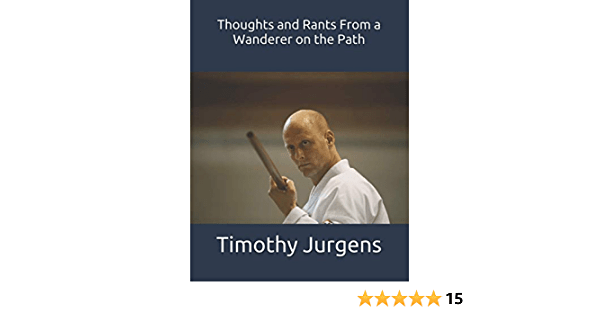
What would happen if you took a series of blog posts, social media posts and notebook journal entries, loosely organized them by themes and then published them as a book? You would get something like Timothy Jurgens’ “Thoughts and Rants From a Wanderer on the Path.
The author, Timothy Jurgens, has been studying various forms of martial arts since the mid-1980s. While his martial arts background is quite broad and varied, his primary “style” is Shorin Ryu. As a classical/traditional martial artist, and a former-Marine, Mr. Jurgens has some very particular views on martial arts, training, etiquette, and other topics.
If the author had included various descriptions of kata and specific training techniques, this book has a similar feel to those written by Motobu Choki and Mabuni Kenwa.
What’s in the book?
As I said, it is largely a collection of “thoughts” and “rants” from the mind of the author that covers a wide range of topics.
Rather than stringing together his thoughts completely randomly, Mr. Jurgens gives us categories of posts such as budo, the dojo, student & teacher, technique (mostly principles of proper training and execution), kata, progress & promotion, his teachers, and useful tidbits regarding Japanese & Okinawan culture.
Frankly, there is a great deal to unpack in this book because the topics are so broad. However, some martial arts practitioners may either find themselves violently agreeing with his thoughts and rants, or find some of his thoughts upsetting.
Opinion
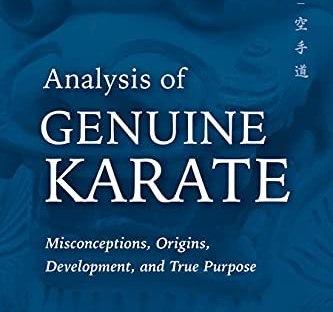
This book isn’t an “academic” work like Clayton’s “Shotokan’s Secrets” or Bayer’s “Analysis of Genuine Karate“. Rather, it is more introspective like Burgar’s “Five Years, One Kata“. That’s not to say that the opinions expressed by the author aren’t grounded in “research”. They are; his research, in this case, consists of over 30 years of martial arts study in the U.S., Japan and Okinawa.
In many regards, this book has a great deal in common with that of Bayer and Burgar because Jurgens is both a martial arts utilitarian and lover of the classic arts. Personally, I found it difficult to disagree with the thoughts he shares.
What this book made me realize about my own martial arts journey is that I am fairly sheltered. On at least two occasions, I got side tracked by his discussions of “XTREME Martial Arts” (because things that are really cool should be XTREME!), self-appointed “grand masters”, and McDojos. Maybe part of this is because it has been over 15 years since I last competed in a martial arts tournament, and I already stay away from “belt factories”. But the wonderful world of YouTube helps to showcase much of the crap that people buy into whenever it is wrapped in cheap marketing blankets and shrouded with the “mysteries” of Eastern martial arts. I’ve seen incomplete and watered down training methods, but I’ve not had a great deal of interaction with the world of screaming karate gymnasts.
Overall, I think this book is a solid find with one caveat. This book with resonate well with traditional/classical martial artists who likely already share many of the same viewpoints. Those who are of the sport “karate” or XTREME “martial arts” variety are likely to put it down quickly without ever understanding why they find Jurgens’ thoughts upsetting (then again, they are unlikely to read this blog..).
Thank you for reading. Until next time.
The goal of the Village Karate of Stafford is to join the efforts to restore information that was lost about the traditional Okinawan martial arts and elevate their status legitimate self defense systems that are applicable to our times. In some cases, we can piece together bits of information that is scattered around the world like a bunch of forensic historians. In other cases, we just have to experiment with concepts, just like the forbearers of karate did, and figure out what works (and then ditch the rest).
Recently, I joined a number of martial arts and karate groups on Facebook. As I am furthering my own journey into the historical and cultural study of karate, I’ve found it helpful to engage in constructive dialog regarding martial arts.
It is a quick read that contains comparison and contrasts of Okinawan karate styles and their descendent Japanese and American styles.
What’s in the book?
The book is organized into three chapters: “Okinawan Karate’s ‘Japanization’, ‘Americanization’ and ‘Commercialization'”, “Arguments to Maintain Okinawan Karate in its Originality’, and “Empirical Evidence and the Laws of Physics to Support the Sociocultural and Historical Arguments”. Let us briefly examine the chapters.
Chapter 1: Okinawan Karate’s ‘Japanization’, ‘Americanization’ and ‘Commercialization’
As most first chapters should be, this chapter sets the tone for the rest of the book because Dr. Bayer clearly defines what is and is not Okinawan karate by simply restating what the governing bodies in Okinawa recognize. To my surprise, my main “style” (such as it is), Shitoryu, does not make the list, and is categorized as Japanese. Dr. Bayer, rightly, makes the point that the only ones who get to determine what is and is not Okinawan karate are Okinawans.
In Japan, by contrast, Okinawan karate is regarded as a subset of Japanese karate because of the (fairly new) incorporation of Okinawa into the Japanese political sphere, and the Japanese belief in the superiority of Japanese budo. Interestingly, other than karate there are few other Okinawan cultural traditions that seem to have been claimed as Japanese. (We’ll get into this in a future post.)
The separation of Okinawan and Japanese karate is important to the discussion in the rest of the book, because Dr. Bayer lays out an argument that Japanese karate is a “disarmed” version of Okinawan karate. The dividing line laid out in the book does not seem to have any exceptions.
Obviously, the farther away from Okinawa one gets, the more one strays from the original form and function of karate. Dr. Bayer broadly categorizes karate and karate derivatives into classical (read as “Okinawan”), traditional (Japanese karate merged with Japanese budo concepts – sometimes referred to in the book as “karatedo” to separate it from “karate”), and sport (bunny hop sparring and baton twirling with swords, etc…).
Here is how Dr. Bayer explains the distinctions. Classical karate is and was designed as a self-protection/self-defense fighting style with very damaging and lethal techniques. Traditionalkaratedo is geared towards self-perfection and as such puts more emphasis on strengthening ones mind, body and spirit using martial arts as a way to do it. In this way, one could theoretically use yoga or rugby to achieve the same result since, as Dr. Bayer claims, the goal is not about the lethal arts anymore. Then there is sport karate – it is flashy, dashy and fun. It is certainly athletic. But (and I completely agree with the author here) it is devoid of anything resembling its classical ancestor – one may as well compare Bengal tigers with house cats.
There are a number of other fascinating threads in this chapter, and in the words of Miyamosh Mushashi, “You should investigate this thoroughly.”
Chapter 2: “Arguments to Maintain Okinawan Karate in its Originality”
Dr. Bayer lays out three key reasons to keep Okinawan karate intact. Much of this chapter is actually a restatement of the previous chapter in different ways.
Rather than restating the three reasons here, I’ll sum it up in one statement (which pretty much sums up the chapter), unless you are Okinawan, if you change or alter Okinawan karate from its original officially recognized forms, it is no longer Okinawan karate. Period.
In this chapter, he also discusses the idea of “never changing kata”, but doesn’t develop this as far as I had hoped.
Chapter 3: “Empirical Evidence and the Laws of Physics to Support the Sociocultural and Historical Arguments”
In this chapter, Dr. Bayer attempts to analyze two of the hundreds (thousands?) of changes between classical karate and traditional karatedo. At this point in the book, he’s limited his analysis of the two categories to two styles: Shorinryu (classical Okinawan karate) and Doshinkan (traditional Japanese karatedo). Any bastardizations by sport karate are simply (rightly) ignored.
He cites three examples: training methods, execution of the cat-stance (Neko ashi dachi) and the execution and change of Nianhanchidachi (a narrower fighting stance).
We’ll take the last two first. Dr. Bayer does some back of the napkin math to show the differences in the ability to close distance using certain stances, power generation, and even physiological stress. To be completely frank, some of the issues that he cites (straightened cat-stances) are things that I have never experienced in over 30 years of training in Japanese or Okinawan martial arts. Some arts, like Shotokan, don’t really use cat stances, but in my experience, when they teach it, it is taught correctly.
The change in nianhanchidachi, which is a pigeon-toed shoulder width stance, is more problematic because it is the less understood stance of the two that the author highlights. Admittedly, I still get this stance wrong more often than not.
Finally, back to the training methods, Dr. Bayer lays out a short list of differences in the training methodologies of classical karate and traditional karatedo. One of the more puzzling differences that he cites is one of a structured curriculum. He has spent a great deal of time studying both Shorinryu and Doshinkan. His observation of Doshinkan is that it lack structure in terms of both rank progression and in the kata that may be incorporated into the style, and then carries that observation over to all Japanese styles. Having studied numerous Japanese styles myself (Shotokan, Kyokushin, and apparently, Shitoryu) I have never seen a lack of defined standards or kata from any dojo or any sensei with whom I’ve studied. This seems to be a peculiarity of Doshinkan.
However, one observation to which I agree is that, in general, Japanese karate is not overly concerned with the self defense applications of kata. The practice of kata for strength, conditioning and self-improvements often seems to be its own reward.
Opinion
My opinion on this book is mixed. Like Shotokan’s Secrets (review here), it is evident that Dr. Bayer conducted a great deal of research in preparation for his book. However, Dr. Bayer, unlike Dr. Bruce Clayton, tends to stick with facts.
Still, the book suffers from two important shortcomings. First, Dr. Bayer has a clear bias (so do I, but I’m not writing an “objective” book on the subject). Second, Dr. Bayer uses his extensive working knowledge of two specific styles and draws conclusions about all styles labeled as Okinawan or Japanese.
Having been a Shitoryu practitioner for the better part of a decade, I do not share Dr. Bayers assessments of the weaknesses of what is apparently a “disarmed” Japanese style. The difference in focus between Motobu-ha Shitoryu and Shotokan (another style that I’ve studied extensively) is stark… and if Dr. Bayer were to level the same criticisms of Shotokan as he does at Doshinkan, most of them would stick.
That said, I do not know if my exposure to Shitoryu’s emphasis on natural stances, throws, locks, nerve strikes, self-defence, and other supposedly Okinawan-only concepts are also a result of Sensei Rob having also studied Gojuryu, Motoburyu, and Motobu Udundi. Maybe we’re an exception to the rule, but I suspect not.
Truthfully, I was expecting a bit more analysis on how changes to kata impact their self-defense applications. I can think of at least 20 changes that Shotkan makes to the Pinan-series of kata (called Heian in Shotokan and other derivate styles). This is where the principle of “Never changing kata” could have been explored in more depth.
Despite the shortcomings, Dr. Bayer raises some important points about who gets to determine what is and is not “Okinawan”, how sportifying and pushing karate into the Olympics changed (for the worse) and delves into some of the problems of commercializing martials arts (which we really didn’t touch on earlier in this review). If nothing else, it is a good think piece that should give serious karateka some pause to ascertain whether their specific martial art matches up with their goals for their studies.
All-in-all, I’d recommend this book. Despite some of my specific disagreements with statements within the book, it sets up the discussion for what should and should not be considered as karate or even martial arts. It sets out the idea that some arts, like traditional karate, retain enough of the form of Okinawan karate to regain much of the function. Doing this requires changing some deeply held institutional artifacts, but it can happen. Most importantly, it serves to pay homage to the forbearers of karate and of the gift that they’ve passed on to the rest of us.
Thank you for reading. Until next time.
The goal of the Village Karate of Stafford is to join the efforts to restore information that was lost about the traditional Okinawan martial arts and elevate their status legitimate self defense systems that are applicable to our times. In some cases, we can piece together bits of information that is scattered around the world like a bunch of forensic historians. In other cases, we just have to experiment with concepts, just like the forbearers of karate did, and figure out what works (and then ditch the rest).
My apologies for the lengthy delay between posts. I’ve had a few articles in the works, but they are not really turning out the way that I would like. While I was trying to sort out the next article, I dusted off a book that I bought nearly 10 years ago, “Shotokan’s Secret: The Hidden Truth Behind Karate’s Fighting Origins,” by Dr. Bruce Clayton.
Before launching into the review of the book, I think it bears mentioning that I’ve studied Shotokan for a total of nearly ten years and with several different organizations. The origins of Shotokan are essentially identical to Shito-ryu and Motobu-ryu in that Mabuni Kenwa and Motobu Choki had the same teachers as Funakoshi Gichin. This importance of this statement will be evident later in this article.
About the book
“Shotokan’s Secret: The Hidden Truth Behind Karate’s Fighting Origins” attempts to uncover the historical applications of the Pinan (“Heian” in Shotokan) katas developed by Anko Itosu. There are three parts to Dr. Clayton’s approach. First, he sets the historical scene in painstaking detail. Second, he suggests some principles and heuristics for analyzing kata. Finally, he lays out his “discoveries” of the historical applications of each Heian kata put in the historical context he outlined in the first section.
Early Figures of Karate
Dr. Clayton attempts to walk down a path that many a karate historian has tried to take before. He gives us a picture of some incredibly tense times in 19th Century Okinawa as the local nobility attempted to serve two masters, the Satsuma samurai and the Ming Dynasty. This split fealty was made even more precarious by the increasing frequency of visits from Western traders and whalers, and then finally, by Commodore Perry’s fleet.
Anko Itosu
The nobility of Okinawa had to protect their king and maintain order against several hostile actors and do it all while unarmed. Dr. Clayton lays out what is known about the men of this age, their concerns, their training and their methods. The central character in this story is Itosu Yasutsune, also known as “Anko”. Anko Itosu is widely revered in the karate world as being the grandfather of karate. Many of his students would go on to create and spread modernized styles of the teachings they learned from him and his contemporaries. Dr. Clayton discusses other figures, as well, but the main focus of the narrative tends to revolve around Anko Itosu.
Three key facts are known about Anko, his career and his teachings. First, he served as the head bodyguard to the Okinawan kings from the mid-1800s until the disbanding of the nobility after the Meiji Restoration in Japan. Second, he created the Pinan (later called “Heian” in Shotokan) katas. Third, in the late 1800s, Anko Itosu lead the effort to teach karate in Okinawan public schools as a physical education program for Okinawan youth.
One of Dr. Clayton’s conclusions about Anko and his fighting methods is probably something with which most people can agree: Anko had to be brutal and efficient. He could not waste time with flowery movements and symbolism when teaching his small cadre of bodyguards and police how to fight. This tendency towards ruthlessness naturally would carry over to all of his teachings in both his early and late career.
However, Dr. Clayton challenges a popular, but historically unverifiable, belief about the Pinan/Heian kata. Most styles hold it as history/lore that the Pinan/Heian katas were created by Anko late in his career as he began to develop lessons for the public schools. Dr. Clayton however, claims that the Pinan/Heian kata were much older, and created by Anko while he was still the chief of security in Shuri Castle.
Neither of these claims can be verified since many written records and people with first-hand knowledge of the origins of these kata were killed in World War II.
Suggested methods for studying kata
After discussing Anko Itosu’s career and the fact that he had no time to waste on extraneous movements, Dr. Clayton lays out some guidelines for unpacking the applications buried in the kata created by Itosu. Here are some of the main rules that he outlines:
Keeping it Real – The historical applications were actual techniques taught at the time of the kata’s creation.
Other Mountains – The applications of kata may be resident in other arts that have been separated from modern karate.
Lesson Plan – Kata are a lesson plan with a specific goal in mind.
Occam’s Razor – The simplest explanation is usually the best.
Crabtree’s Bludgeon – One can make up explanations for anything.
Dinglehoppers – A term borrowed from “Little Mermaid” to explain embarrassing applications created through Crabtree’s Bludgeon
Shadow Principle – If the application and the kata share the same form, it may be a good fit.
Symbolism Rule – Just because we cannot explain a move, doesn’t mean that it is somehow symbolic (think of the opening of Kusanku/Kanku Dai).
Last Move Rule – If we can’t make sense of the last moves seen in the kata, they are probably added in for symmetry. He cites the “bunny hops” in Chinte kata as a prime example.
Dr. Clayton’s Interpretations of the Pinan/Heian kata
I should state that, up until this point in the book, I was largely along for the ride. Dr. Clayton’s history, while a bit biased, seems plausible enough, and the rules he creates for analyzing kata are pretty good ones. In fact, Bill Burgar, has a similar rule set for analyzing kata applications.
Based on the rules above, here are the general themes that Dr. Clayton lays out for each of the Pinan/Heian kata:
Pinan Nidan/Heian Shodan – How to disarm an unarmored Samurai (or two) and use their swords.
Pinan Shodan/Heian Nidan – Wandering around throwing linear, bodyweight punches against other unarmed combatants (I’m not making this up).
Pinan/Heian Sandan – Fighting drunken sailors in Naha.
Pinan/Heian Yondan – Fighting an armored Samurai.
Pinan/Heian Godan – Fighting against a bayonet-wielding U.S. Marine.
Opinion
Frankly, I have mixed feelings about this book. Dr. Clayton clearly put a great deal of research and thought into this work. That said, aside from being riddled with biases against other styles of modern karate and their teachers (he holds particular disdain for Motobu Choki and Kyan Chofu), he takes the excellent list of principles for analyzing kata and violates almost every one of them.
Dr. Clayton’s historical analysis and setup ignores the fact, documented by Mabuni Kenwa, Motobu Choku and Funakoshi Gichin themselves, that kata were treated as complete fighting systems. Many of the old masters only knew between 3 and 5 of them because they held a wide variety of self-defense applications. They were not, in fact, “themed” in the manner that Dr. Clayton suggests.
In addition to taking aim at some of the masters of old, Dr. Clayton also calls out a particularly prominent kata researcher, Iain Abernathy… twice. He says that while Abernathy’s application of kata are “viciously practical”, they are not historically accurate.
Interestingly, if one were to compare the analysis of kata done by Iaian Abernathy and Dr. Clayton against Dr. Clayton’s principles for understanding kata, Iaian’s explanations would tick every one of Clayton’s boxes.
Clayton violates his own rules by creating incredibly complicated explanations for kata that were, in all likelihood, created after Itosu served as Shuri Castle’s head of security. He bludgeons his “dinglehopper” explanations into the kata and ignores the fact that other kata that existed at this time are compilations of grappling techniques, throws and locks.
Oh… and the “bunny hops” from Chinte? Iain Abernathy shows an incredibly practical explanation for those in a way that uses every move of Chinte kata instead of being discarded.
Chinte “bunny hops”
While there is a great deal that I disagree with in this book, there is one thing with which Dr. Clayton and I could agree. One should not be limited to one style or school of thought within the martial arts – although, given the overt bias towards Shotokan in this book, this is a bit of an ironic conclusion. Perhaps this conclusion is, in part, meant to deflect from the vast amount of criticism that Dr. Clayton received from his first release of the book. After all, if someone disagrees, they must be stuck in their ways.
Still, the point stands. Martial artists should do what the old masters did: learn from anyone and everyone with something of value to teach.
Overall, I’d recommend that folks pass on this book. The history presented in it is riddled with bias and the kata applications shown in it are far-fetched. Other books have more to offer in terms of historical value and understanding of martial arts than this one.
The goal of the Village Karate of Stafford is to join the efforts to restore information that was lost about the traditional Okinawan martial arts and elevate their status legitimate self defense systems that are applicable to our times. In some cases, we can piece together bits of information that is scattered around the world like a bunch of forensic historians. In other cases, we just have to experiment with concepts, just like the forbearers of karate did, and figure out what works (and then ditch the rest).



 Village Karate of Stafford