
The really short answer is the focus/philosophy of the specific art, technique focus, and stances.
Originally, karate was an combination of local Okinawan grappling, called tegumi, Chinese kung fu and other arts from Indonesia, the Philippines, Formosa, and Thailand. Because it was treated as a self-defense system with a grappling base, most of the techniques were joint locks, throws and control techniques from within grabbing/gripping distance. Strikes were short, fast and focused on “vital points” (nerve clusters) to incapacitate someone as quickly as possible.
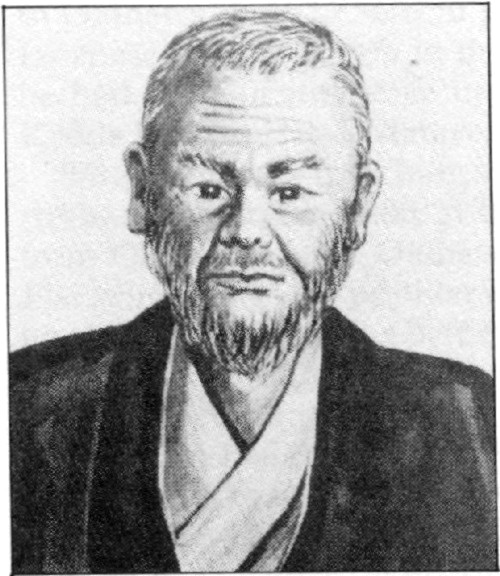
Historically, Okinawan karate was taught in small groups for the aforementioned self-defense purposes. After Japan took over Okinawa and abolished the Okinawan monarchy, Anko Itosu (one of the Okinawan king’s body guards, and also one of Funakoshi Gichin’s teachers) convinced the local Okinawan prefecture to adopt karate into the public school system. He made some changes to classical karate and created new kata for young students (the Pinan/Heian katas).
When it was imported to mainland Japan, there were a number of important things happening. Judo was created by Jigoro Kano to rival Greco-Roman wrestling, and the Japanese (who didn’t have a true striking art since) decided that they would adopt karate as a rival system to Western boxing and French savate (foot boxing). So, striking became a larger focus of Japanese karate – Shotokan derivates, like Kyokoshin, are almost totally focused on striking.
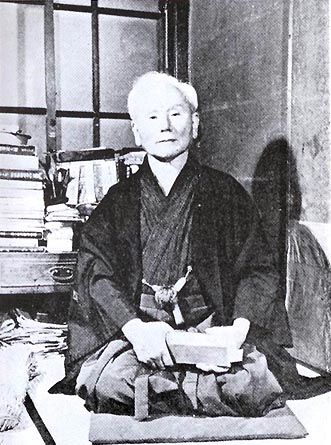
Funakoshi Gichin and other karate forebearers changed the philosophy to focus on character development (which also had importance to developing young men for military service). Also, since classes were taught in large auditoriums, movements became larger and a bit more embellished, in part, so that folks in the back of the class could see what was happening! Also, since Japan was going through a period of intense nationalism, references to Chinese-hand (todi, the original Okinawan name for karate) were eliminated. Funakoshi Gichin even went as far as changing kata names from Chinese-derived names to Japanese name with similar meaning (e.g. Pinan to Heain, Seisan to Hangetsu, Wansu to Enpi, Chinto to Gankakku, Nianhanchi to Tekki, etc).
This is obviously a way over-simplified answer, but as I said, folks have written books about this.
So in summary (again, simplified):
- Okinawan karate tends to focus on close-in fighting; Japanese karate has a larger focus on longer-range striking
- Okinawan stances are more upright; Japanese karate tends to have lower stances
- Okinawan focus tends to be on self-defense (this is slowly changing though too); Japanese karate is focused on character development and fitness

 Village Karate of Stafford